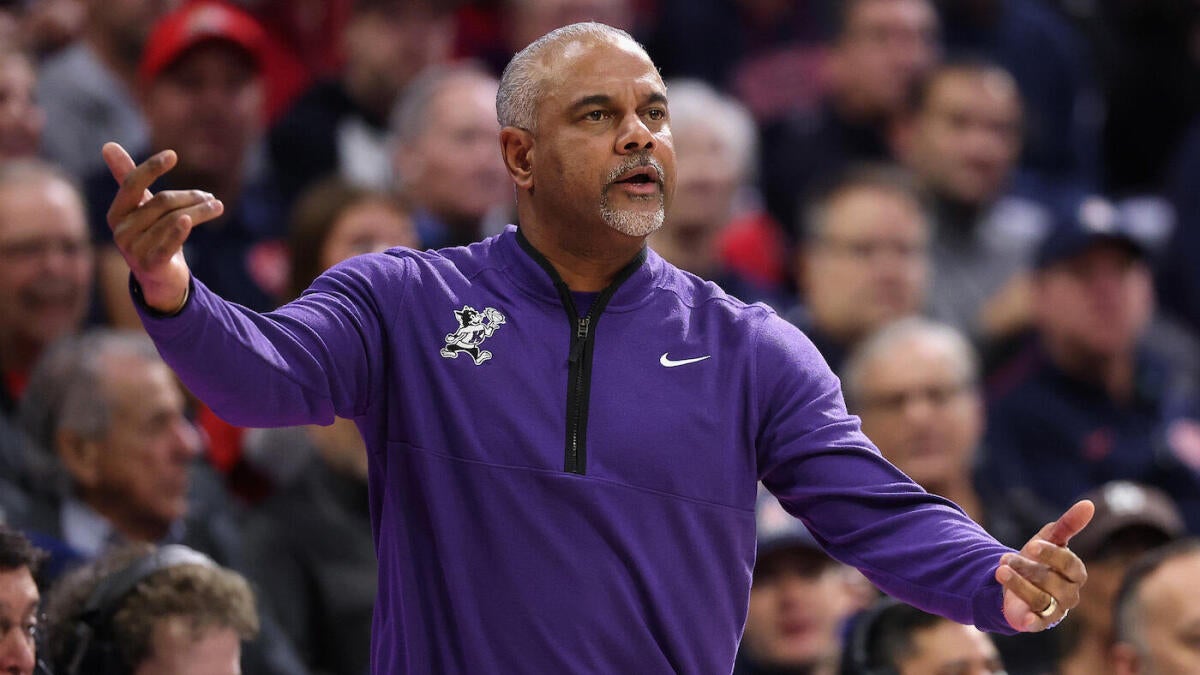
The Shockwave: Jerome Tang's Dismissal from Kansas State Basketball
The world of college athletics is no stranger to sudden changes, but the firing of
Kansas State Basketball Coach Jerome Tang on Sunday, February 15th, sent ripples across the landscape. The decision, announced by K-State athletic director Gene Taylor, came swiftly, just days after a series of public comments and game performances that ultimately sealed Tang's fate. While the Wildcats program had experienced moments of brilliance under Tang, particularly an Elite Eight run in his inaugural season, recent events painted a different picture—one that K-State leadership deemed out of alignment with the university's core values.
Taylor's official statement underscored the gravity of the situation: “This was a decision that was made in the best interest of our university and men’s basketball program. Recent public comments and conduct, in addition to the program’s overall direction, have not aligned with K-State’s standards for supporting student-athletes and representing the university. We wish Coach Tang and his family all the best moving forward.” This pointed declaration left little doubt that Tang's words, rather than solely his team's record, played a pivotal role in his abrupt exit.
The Incendiary Press Conference: What Tang Said That Led to His Firing
The immediate catalyst for Tang's dismissal was a raw, unfiltered news conference held on February 11th, following Kansas State's humiliating 91-62 home loss to Cincinnati. The atmosphere in Bramlage Coliseum that night was bleak, with disgruntled Wildcats fans resorting to wearing paper bags over their heads in a symbolic act of protest. Tang, visibly frustrated and angry, did not hold back in his assessment of his team's performance.
His words were stark and unflinching:
- "This was embarrassing. These dudes do not deserve to wear this uniform, and there will be very few of them in it next year. I'm embarrassed for the university, I'm embarrassed for our fans, and our student section. It's just ridiculous."
- "We have practice at 6 a.m. tomorrow. I have no answers or no words. Y'all got two questions, so whoever wants to ask two questions, I'll answer 'em to the best of my ability right now. But right now, I'm pissed."
- "These dudes have to have some pride, man. It means something to wear a K-State uniform. It means something to put on this purple, man. Our university's all about that, and it's why I love this place, man. They don't love this place, so they don't deserve to be here."
These comments, particularly the direct and public disparagement of his student-athletes' commitment and their worthiness to represent the university, immediately ignited a firestorm. The idea that "they don't love this place, so they don't deserve to be here" struck many as an unacceptable public rebuke of young people under his charge.
The situation was further complicated just three days later, when K-State faced Houston. In a controversial move, the names were removed from the players' jerseys for that game—a decision widely interpreted as a direct consequence or continuation of Tang's earlier sentiments, further fueling the narrative of a program in disarray. For a deeper dive into the specific events of that fateful media session, read more about
The Press Conference That Led to Jerome Tang's K-State Firing.
K-State's Stance: Why Athletic Director Gene Taylor Acted Decisively
At the Sunday news conference announcing Tang's termination, Athletic Director Gene Taylor articulated the university's firm stance. "What he said about the student-athletes really concerned me," Taylor stated, pinpointing the precise turning point. This wasn't merely about wins and losses; it was about the fundamental responsibility of a university to nurture and support its student-athletes, both on and off the court.
Taylor elaborated on the contractual and ethical implications: "There's language in his contract that addresses certain things that could potentially bring embarrassment." He highlighted that Tang's comments and the ensuing negative reaction—both nationally and locally—crossed a critical line, creating an environment that the university could not condone. For an institution like Kansas State, which boasts a rich basketball history including 19 regular-season conference championships and four Final Four berths, upholding standards of respect, integrity, and support for its athletes is paramount. Coaches are not just strategists; they are mentors and representatives of the university's ethos. The public nature and severity of Tang's criticism were seen as a breach of that trust and a direct contradiction of K-State's values.
The Financial Fallout: 'For Cause' Termination and the Buyout Battle
Beyond the immediate shock of the firing, the financial implications present a significant challenge. Jerome Tang had five years remaining on his contract, with an estimated buyout set at a substantial $18.675 million, according to the USA TODAY Sports head coaches salaries database. However, Athletic Director Gene Taylor explicitly stated that Tang was fired "for cause."
This "for cause" distinction is crucial and often contentious in coaching contracts. If a coach is fired "for cause," it typically implies a breach of contract, which can significantly reduce or even eliminate the university's obligation to pay the full buyout amount. This sets the stage for a potential legal battle, as evidenced by Tang's own statement following his dismissal: "I am deeply disappointed with the university’s decision and strongly disagree with the characterization of my termination. I have always acted with integrity and fa[ith]." His strong disagreement with the "characterization" suggests a challenge to the "for cause" grounds, indicating that this situation is far from over. The coming months will likely see legal teams negotiate or litigate the terms of this multi-million dollar separation. To understand more about the financial ramifications, see
K-State Fires Jerome Tang 'For Cause' Amid $18M Buyout Battle.
Beyond the Headlines: Lessons in Leadership and Athlete Relations
The swift firing of
Kansas State Basketball Coach Jerome Tang serves as a stark reminder of the evolving landscape of college athletics and the immense pressures and responsibilities placed upon coaches. This incident extends beyond simple wins and losses, delving into the delicate balance between accountability, motivation, and athlete welfare.
The Evolving Role of the Modern Coach
Coaches today are more than just strategists and recruiters; they are public figures, mentors, and brand ambassadors. Their words carry immense weight, especially when directed at student-athletes who are still developing, navigating academic demands, and often facing intense public scrutiny. What might have been considered "tough love" in a bygone era can now be viewed as harmful or unprofessional public criticism.
The Paramountcy of Student-Athlete Welfare
Universities are increasingly prioritizing the holistic well-being of their student-athletes. Publicly questioning a player's commitment or "love" for the program can undermine their confidence, impact their mental health, and damage their reputation, potentially affecting future opportunities. Institutions are bound by a duty of care, and actions perceived as detrimental to that care can lead to severe consequences.
Communication is Key: Tips for Coaches and Athletic Departments
- Choose Your Words Wisely: In high-pressure situations, emotions run high. Coaches must master the art of constructive criticism delivered privately, reserving public comments for team performance rather than individual or perceived character flaws.
- Understand the Contract: Both coaches and athletic directors must be intimately familiar with contractual clauses pertaining to conduct, public statements, and "for cause" terminations.
- Align with University Values: Every athletic program operates within the broader ethical framework of its university. Coaches are expected to embody and uphold these values, particularly regarding respect, integrity, and support for students.
- Support Systems: Universities should ensure robust mental health and support services are available for student-athletes, and coaches should be trained to recognize and utilize these resources.
- Crisis Communication: Athletic departments need clear protocols for managing sensitive situations and public statements, ensuring consistency and adherence to institutional messaging.
In a competitive environment where the stakes are incredibly high, the episode surrounding Jerome Tang's departure from K-State offers a profound lesson: while passion and a desire to win are essential, they must always be tempered by professionalism, respect for student-athletes, and alignment with the overarching values of the educational institution. The legacy of programs like K-State, with storied figures such as Tex Winter who led the Wildcats for 14 seasons with a .689 winning percentage, is built not just on victories but on the principles of mentorship and development.
Conclusion
The abrupt firing of Jerome Tang as
Kansas State Basketball Coach underscores a critical shift in collegiate athletics, where a coach's public conduct and relationship with student-athletes now hold as much weight as their team's performance on the court. While Tang's initial season saw remarkable success, his impassioned, yet publicly critical, comments following a tough loss ultimately led to his downfall. Gene Taylor's decisive action, rooted in protecting the university's standards and student-athlete welfare, highlights the zero-tolerance policy for behaviors deemed to be out of alignment with institutional values. As the legal battle over Tang's substantial buyout looms, this incident will serve as a powerful cautionary tale for coaches and athletic administrators alike, emphasizing the profound importance of professional conduct, empathetic leadership, and careful communication in the high-stakes world of college sports.