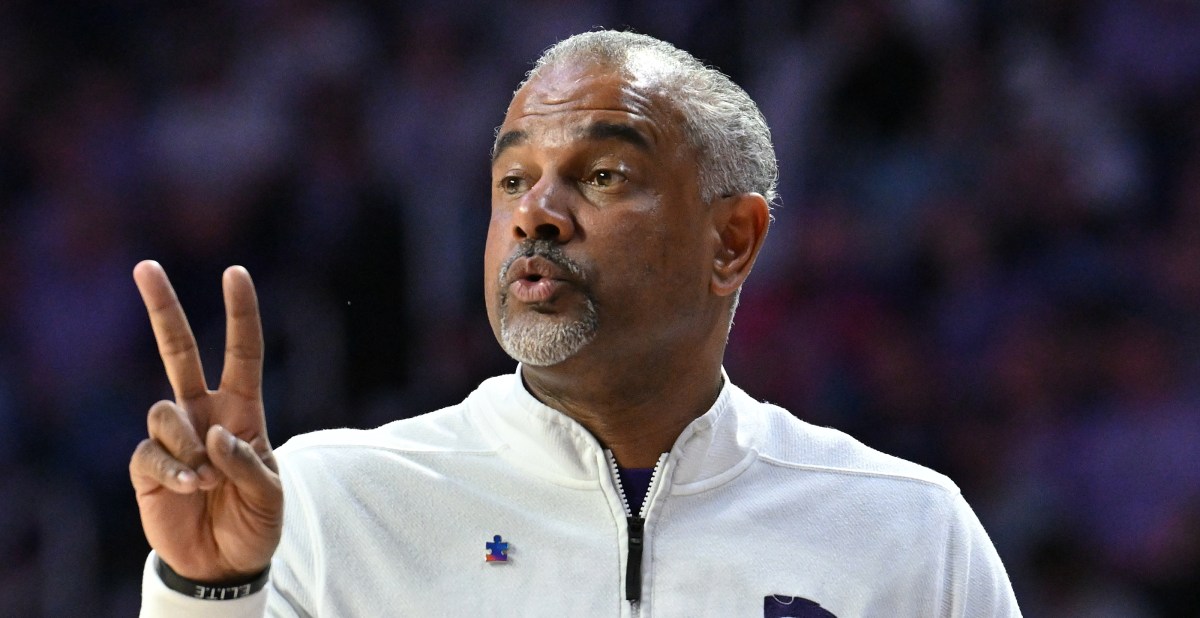
The world of college athletics, often a stage for dramatic triumphs and crushing defeats, recently witnessed a significant upheaval in Manhattan, Kansas. In a move that sent shockwaves through the Big 12 Conference and beyond, Jerome Tang, the high-profile Kansas State Basketball Coach, was fired 'for cause' on Sunday night, February 15th. This decision, announced by K-State athletic director Gene Taylor, immediately ignited an $18 million buyout battle, casting a long shadow over the future of the Wildcats' men's basketball program.
The abrupt dismissal came just days after a tumultuous period for the Wildcats, marked by a demoralizing home loss and a highly contentious postgame press conference where Tang's comments regarding his players drew widespread criticism. This article delves into the specific events that led to Tang's departure, the implications of a 'for cause' firing, and what this pivotal moment means for Kansas State basketball moving forward.
The Controversial Press Conference: A Catalyst for Dismissal
The seeds of Tang's dismissal were sown in the immediate aftermath of Kansas State's embarrassing 91-62 home loss to Cincinnati on February 11th. The defeat was not just a blow to the team's record; it was a deeply humiliating experience for the Wildcats faithful, some of whom were reportedly seen wearing paper bags over their heads in the stands, a stark symbol of their frustration. Following this performance, Coach Tang delivered a scathing indictment of his team in a postgame news conference that would ultimately seal his fate.
His words were unfiltered and uncompromising. "This was embarrassing," Tang declared. "These dudes do not deserve to wear this uniform, and there will be very few of them in it next year. I'm embarrassed for the university, I'm embarrassed for our fans, and our student section. It's just ridiculous." He continued, emphasizing the gravity of wearing the K-State purple: "It means something to wear a K-State uniform... Our university's all about that, and it's why I love this place, man. They don't love this place, so they don't deserve to be here."
These remarks, particularly those questioning his players' commitment and worthiness to represent the university, immediately drew a firestorm of negative attention. Critics argued that such public shaming of student-athletes was not only counterproductive but also deeply detrimental to their mental well-being and the program's reputation. The incident was quickly flagged by observers nationwide, sparking a debate about coaching decorum and the appropriate ways to motivate collegiate players in the modern era.
Just days later, after a 78-64 loss to Houston where K-State players had their names removed from their jerseys (a symbolic gesture the context implies was related to the previous comments), Athletic Director Gene Taylor announced Tang's termination. Taylor explicitly cited Tang's comments as a primary concern. "What he said about the student-athletes really concerned me," Taylor stated, underscoring the university's commitment to supporting its athletes. For a more detailed look at the specific events and their immediate aftermath, read The Press Conference That Led to Jerome Tang's K-State Firing.
The "For Cause" Firing and the $18 Million Buyout Imbroglio
Perhaps the most contentious aspect of Tang's firing is K-State's assertion that it was "for cause." This legal distinction carries significant financial weight, as it directly impacts the hefty buyout stipulated in Tang's contract. With five years remaining on his deal, Tang's buyout was set at an eye-watering $18.675 million, according to the USA TODAY Sports head coaches salaries database.
In college athletics, a 'for cause' termination typically allows an institution to dismiss a coach without paying the full remaining buyout, citing specific contractual violations such as gross misconduct, unethical behavior, or actions that bring embarrassment or disrepute to the university. Gene Taylor confirmed this angle, stating, "There's language in his contract that addresses certain things that could potentially bring embarrassment." He further elaborated, "Basically, his comments about the student-athletes and the negative reaction to those comments from a lot of sources, both nationally and locally, is where I kind of thought we needed to make the decision."
Unsurprisingly, Jerome Tang vehemently disputes this characterization. In a brief statement following his dismissal, he expressed deep disappointment and firmly stated, "I strongly disagree with the characterization of my termination. I have always acted with integrity and fa..." The incomplete nature of the statement, cut off abruptly, only adds to the drama, hinting at a strong defense and a potential legal battle over the multi-million dollar buyout. Such disputes are not uncommon in high-stakes coaching changes, often resulting in protracted negotiations or even litigation. The university's decision to fire "for cause" is a clear signal that they believe Tang's actions crossed a contractual line, and they are prepared to defend that position. For deeper insights into the athletic director's rationale, check out Inside Jerome Tang's Firing: 'What He Said Concerned Me'.
Beyond the Headlines: The Broader Implications for Kansas State Basketball
While the immediate focus is on the controversial comments and the buyout, Tang's firing also signals deeper considerations about the direction of the Kansas State Wildcats men's basketball program. Gene Taylor's statement explicitly mentioned "the program’s overall direction" alongside Tang's conduct, suggesting that recent on-court performance also played a role.
Tang, in his first year, had led the Wildcats to a surprising Elite Eight appearance, galvanizing the fan base. However, the second year saw a significant drop-off, with the team underperforming expectations, culminating in the aforementioned losses. This underscores the intense pressure on any Kansas State Basketball Coach to deliver consistent results in the highly competitive Big 12 Conference.
Moreover, this incident highlights a critical aspect of modern college sports: student-athlete welfare. In an era where mental health and player empowerment are increasingly prioritized, a coach's public criticism of their team can be perceived as detrimental and out of touch. The rise of the Name, Image, and Likeness (NIL) landscape and the transfer portal has also shifted power dynamics, making player relationships and positive team culture more crucial than ever for sustained success and recruiting.
The Kansas State men's basketball program boasts a rich history, with 19 regular-season conference championships, 33 NCAA Tournament appearances, and four Final Four berths since its inception in 1906. This legacy places high expectations on every coach who assumes the mantle. The search for a new leader will undoubtedly consider not just a coach's X's and O's capabilities but also their ability to embody the university's values, foster a supportive environment, and effectively navigate the complexities of contemporary college athletics.
What's Next for the Wildcats? The Search for a New Leader
With Jerome Tang's departure, the focus immediately shifts to finding the next Kansas State Basketball Coach. This is a pivotal moment for the program, requiring a careful and considered approach to ensure stability and future success. The challenges facing the new coach will be manifold:
- Rebuilding Trust: The next coach must quickly establish trust with the current roster, many of whom were just publicly criticized, and foster a positive team culture.
- Navigating the Transfer Portal: Given the timing of the firing, the program must work swiftly to retain current players and attract new talent in the unpredictable transfer portal landscape.
- Recruiting: A new coach will need to hit the ground running on the recruiting trail, articulating a clear vision for the future to prospective student-athletes.
- Big 12 Competitiveness: The Big 12 is consistently one of the toughest conferences in the nation. The new coach must be prepared for immediate competitiveness.
For athletic directors in similar situations, the search for a new head coach involves a multi-faceted evaluation. Beyond a strong coaching resume, key qualities to prioritize include:
- Exceptional Communication Skills: Especially the ability to communicate constructively and empathetically with young athletes, both in victory and defeat.
- Understanding of Modern College Athletics: A coach must be adept at navigating NIL, the transfer portal, and the evolving landscape of player relationships.
- Commitment to Student-Athlete Well-being: Prioritizing mental and physical health, creating a supportive and developmental environment.
- Strong Leadership and Character: Someone who inspires confidence, represents the university with integrity, and can unite the fan base.
- Proven Program Builder: A track record of developing players and building sustainable success, not just one-off runs.
The K-State fan base, known for its passionate support, will be eagerly awaiting the announcement of the next leader. Their expectations will be high, seeking a coach who can restore pride, deliver consistent winning, and uphold the values that make the purple a powerful symbol in college basketball.
The firing of Jerome Tang marks a dramatic and costly chapter for Kansas State basketball. From a scorching postgame press conference to a 'for cause' dismissal battling an $18 million buyout, the events have brought national attention to the program. As the university navigates the legal complexities and embarks on a crucial coaching search, the focus remains firmly on the future. The next Kansas State Basketball Coach will inherit a proud legacy and the immense responsibility of steering the Wildcats through these challenging waters, aiming to return the program to its competitive glory while embodying the values of respect and support for its student-athletes.