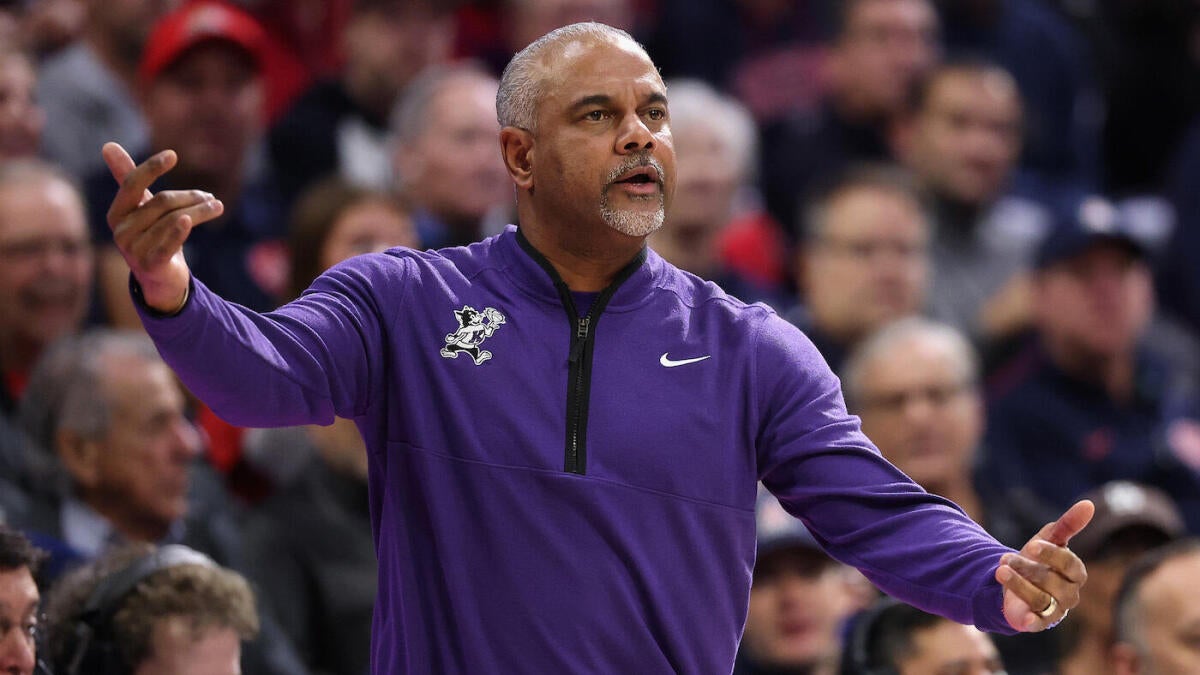
The Press Conference That Shook K-State: Unpacking Jerome Tang's Firing
In the high-stakes world of collegiate athletics, the pressure on a Kansas State Basketball Coach is immense. Expectations are sky-high, and every public statement is scrutinized. Rarely, however, does a coach's own words in a post-game press conference directly precipitate their swift departure. Such was the dramatic turn of events that led to Jerome Tang's firing as the head coach of the Kansas State Wildcats men's basketball program, a decision announced on a somber Sunday night, February 15.
The firing wasn't merely due to a struggling season, but rather a direct consequence of "recent public comments and conduct" that, according to K-State athletic director Gene Taylor, failed to align with the university's standards for supporting student-athletes. This pivotal moment unfolded just days after a particularly scathing press conference, leaving many to wonder: what exactly did Jerome Tang say that warranted such a drastic, immediate action?
The Tipping Point: Tang's Scorched-Earth Press Conference
The catalyst for Tang's dismissal was undoubtedly his raw, unfiltered commentary following a humiliating 91-62 home loss to Cincinnati on February 11. The defeat was not just a poor performance; it was a spectacle, with frustrated Wildcats fans resorting to wearing paper bags over their heads in a stark display of disappointment. For a Kansas State Basketball Coach, such a scene at home is almost unthinkable, signaling a deep disconnect between the team and its passionate fanbase.
In the immediate aftermath, a visibly enraged Tang delivered a press conference that would quickly go viral and seal his fate. His words were cutting, directed squarely at his players:
- "This was embarrassing. These dudes do not deserve to wear this uniform, and there will be very few of them in it next year."
- "I'm embarrassed for the university, I'm embarrassed for our fans, and our student section. It's just ridiculous."
- "We have practice at 6 a.m. tomorrow. I have no answers or no words. Y'all got two questions, so whoever wants to ask two questions, I'll answer 'em to the best of my ability right now. But right now, I'm pissed."
- "These dudes have to have some pride, man. It means something to wear a K-State uniform. It means something to put on this purple, man. Our university's all about that, and it's why I love this place, man. They don't love this place, so they don't deserve to be here."
Such a public dressing-down, questioning players' commitment and worthiness to represent the university, sent shockwaves through the collegiate sports world. The message was clear, but its delivery and content quickly raised red flags about player welfare and institutional representation. The intensity of Tang's frustration was palpable, but the long-term implications of his words would soon become tragically evident. Just three days later, in a 78-64 loss to Houston, the Wildcat players had their names removed from their jerseys, a move widely perceived as a continuation of Tang's disciplinary approach.
The Athletic Director's Stance: Standards and Student-Athlete Welfare
The swift action taken by Kansas State Athletic Director Gene Taylor underscored the severity of Tang's comments. At the Sunday news conference announcing the firing, Taylor was direct about his primary concern. "What he said about the student-athletes really concerned me," Taylor stated, highlighting the university's commitment to supporting its young athletes. This was not merely about winning or losing games; it was about the fundamental values of dignity and respect.
Taylor further elaborated that there are specific clauses in a Kansas State Basketball Coach's contract that address conduct potentially bringing "embarrassment" to the university. Tang's remarks, coupled with the "negative reaction to those comments from a lot of sources, both nationally and locally," squarely triggered this contractual provision. The institution's image, its relationship with its student-athletes, and its reputation in the broader collegiate sports landscape were all at stake.
The incident serves as a crucial reminder for all coaches and athletic departments about the delicate balance between demanding excellence and fostering a supportive environment. Public criticism of student-athletes, particularly concerning their character or commitment, can easily cross a line, leading to significant repercussions for the individual coach and the institution. For a deeper dive into the AD's perspective, read our related article: Inside Jerome Tang's Firing: 'What He Said Concerned Me'.
Beyond the Blame Game: Analyzing the Program's Direction
While the infamous press conference was the immediate catalyst, AD Gene Taylor's statement also referenced the "program’s overall direction" as a contributing factor to the decision. This suggests that the Cincinnati loss and Tang's subsequent comments were not isolated incidents but perhaps symptomatic of deeper issues within the Wildcats men's basketball program. Coaching in the fiercely competitive Big 12 Conference is notoriously challenging, demanding consistent performance and strategic vision from any Kansas State Basketball Coach.
The pressure to succeed in such a conference can be immense, leading coaches to extreme measures in an attempt to motivate their teams. However, Taylor's comments imply that Tang's methods and leadership style, at least in this instance, deviated from K-State's established standards for athlete support. A healthy program thrives on a foundation of mutual respect, trust, and clear communication, even during difficult seasons. When these foundations are perceived to be shaken, particularly through public discourse, it can indicate a broader systemic challenge.
Effective leadership in sports requires not only tactical acumen but also profound emotional intelligence. Understanding how to motivate, critique, and guide young athletes through adversity while upholding institutional values is paramount. The "overall direction" comment hints at a potential disconnect between the coaching philosophy and the university's ethos, a gap that the AD ultimately deemed too wide to bridge.
The Financial Ramifications: 'For Cause' and the Buyout Battle
The termination of a head coach, particularly mid-season, almost always involves significant financial considerations. For Jerome Tang, his contract, which had five years remaining, carried a substantial buyout clause of $18.675 million, according to the USA TODAY Sports head coaches salaries database.
However, K-State's athletic director Gene Taylor explicitly stated that Tang was fired "for cause." This designation is critical and has profound implications for the buyout. When a coach is fired "for cause"—meaning for violating specific terms of their contract, often related to conduct or performance standards—the university typically seeks to avoid paying the full buyout, or any buyout at all, depending on the contractual language. This legal nuance often leads to protracted negotiations or even legal battles between the coach and the university.
The "for cause" firing indicates K-State's strong belief that Tang's actions constituted a breach of his contractual obligations, specifically concerning bringing embarrassment to the university and failing to uphold standards regarding student-athletes. This legal posture suggests that the university is prepared to defend its decision to avoid the massive financial obligation. The full financial fallout and whether Tang's camp will challenge the "for cause" determination will likely unfold in the coming months. Learn more about the financial implications in our dedicated piece: K-State Fires Jerome Tang 'For Cause' Amid $18M Buyout Battle.
A Legacy Interrupted: Jerome Tang's Tenure and K-State's Coaching History
Jerome Tang's tenure as Kansas State Basketball Coach, while ending abruptly and controversially, will be remembered for this pivotal incident. The program, with its rich history dating back to 1906, has seen 24 head coaches guide the Wildcats through triumphs and challenges. Legendary figures like Tex Winter, who coached from 1954 to 1968 and amassed a program-best .689 winning percentage (261–118 overall record), set a high bar for excellence and conduct. K-State basketball boasts an impressive record of 19 regular-season conference championships, 33 NCAA Tournament appearances, and four Final Four berths, cementing its place as a significant force in college basketball.
The standards for leadership and representation at an institution like Kansas State are deeply embedded in this storied past. While Tang's passion for the program was evident, the manner of his departure serves as a stark reminder that passion must be tempered with professionalism and an unwavering commitment to the well-being and development of student-athletes. The role of a Kansas State Basketball Coach is not merely about X's and O's; it's about embodying the university's values and fostering an environment where young men can thrive, both on and off the court.
Conclusion
The firing of Jerome Tang as Kansas State Basketball Coach is a powerful case study in the complexities of modern collegiate sports. It underscores how critical a coach's public communication is, particularly regarding student-athletes, and how rapidly a single press conference can unravel a career. The incident highlights the growing emphasis placed by universities on athlete welfare, pushing institutions to act decisively when core values are perceived to be compromised. As K-State embarks on its search for a new leader, the lessons learned from Tang's dramatic exit will undoubtedly influence the qualities and conduct they seek in their next Wildcats men's basketball head coach, reinforcing the notion that leadership extends far beyond the scoreboard.